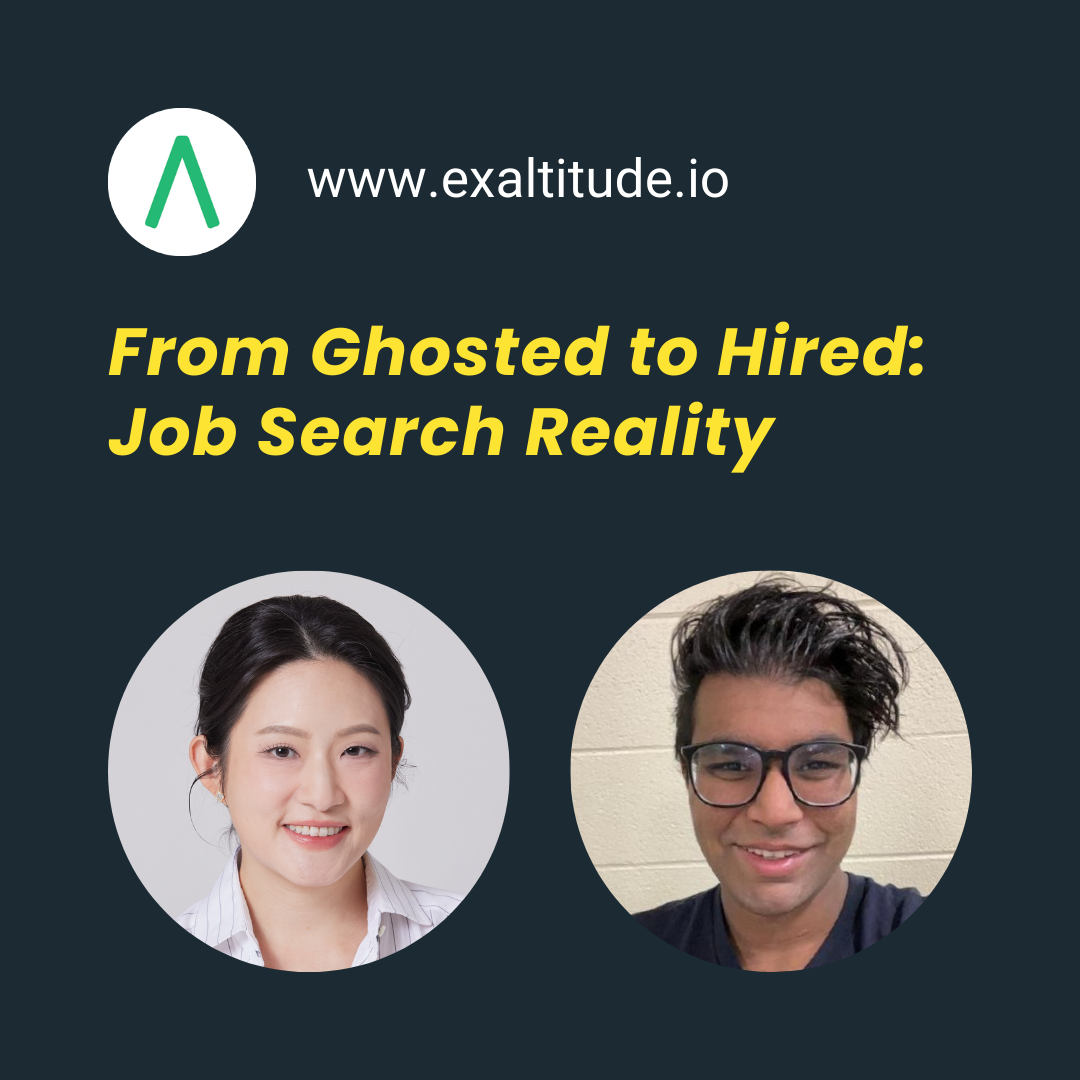
Manjesh Prasad is a Full-Stack AI Engineer at Kismet XYZ and Omnisense Labs, with an M.S. in Engineering. He specializes in building end-to-end systems across the PERN and MERN stacks, with a focus on machine learning and deep learning applications. His work spans scalable SaaS platforms and agentic AI systems, combining strong software engineering fundamentals with applied AI development.
Exaltitude newsletter is packed with advice for navigating your engineering career journey successfully. Sign up to stay tuned!
Jean: Can you briefly introduce yourself and the kind of roles you have been targeting in your job search?
Manjesh: My name is Majesh Prasad, a full-stack AI Engineer at Kismet XYZ and a recently hired Software Engineer intern at Gatewayz. My focus is on delivering end-to-end solutions, with a deep passion for engineering high-impact applications, from scalable B2B SaaS platforms to Agentic AI systems. In my downtime, I like to attend various Hackathons in the San Francisco Tech Hub, where I have consistently been part of a top-performing team.
During my job search, the roles that I primarily targeted were related to my past full-stack experiences, but with AI factored in. If a company had full-stack elements and some level of AI technologies embedded in their description, I would hit apply without question.
Jean: You tried platforms like LinkedIn, Indeed, ZipRecruiter, WellFound, and Handshake. Which platform did you find most helpful, and why?
Manjesh: Every job-searching platform has its pros and cons. LinkedIn remains the dinosaur of job applications. I was never a fan of the ‘fast apply’ feature these platforms provide, as modern AI bots capitalize on mass applying to those opportunities.
I’ve also tried out Indeed, ZipRecruiter, Handshake, and WellFound. The outcome, however, was underwhelming.
LinkedIn still proved to be the most reliable site for securing interviews.
This is my recommendation for job searching on LinkedIn:
Jean: You mentioned the moment when you realized that some job opportunities just weren’t worth your time. What patterns or red flags helped you recognize that?
Manjesh: Yes, several low-quality postings came across my entire job search. Although there are no concrete factors that can absolutely classify an opportunity as synthetic or genuine, the interactions during virtual conversations, the quality of job postings, and the recruiter’s background can raise suspicion.
For opportunities within a stealth-mode company, there is a level of forgiveness regarding the clarity of their organizational identity. However, this does not apply to larger, more established companies. Opportunities lacking clarity at this advanced stage warrant being flagged as low quality and not worth my time investment.
Secondary factor is the quality of interactions during initial calls or technical interviews. One of the most notable indications was the lack of structure in the interview process.
Here is an anecdote: I was contacted by an independent talent acquisition individual. They claimed their client is a consulting firm for many customers in the San Francisco Hub. They claimed one of their lead customers is Meta Super Intelligence Lab. But once the interview process started, I quickly sensed the interviewer lacked the technical expertise and the proper credentials.
The lack of transparency was also concerning: I found neither his LinkedIn profile nor any evidence of his prior work, the company page was inactive, and most importantly, there was no technical structure during my interactions. Based on my past interview experience, I expected live coding, walkthrough verbal solutions, and a system design approach; however, these were not visible during the interactions.
These red flags led me to conclude that the opportunity was low quality and not worth my time.
Some key takeaways from this interaction:
Jean: Great tips! A high signal interview should feel like mutual exploration that builds trust for both sides.
Jean: At some point, you decided to stop relying only on online applications and started printing your resume and going to hackathons and tech summits.
Manjesh: After repeatedly hitting a wall with the standard "apply online" approach, I recognized that my applications were not being taken seriously. After applying to 6,000 positions since earning my Master’s in May 2025, I needed to try something new.
As I was sitting in my home office around October 2025, lost in a pool of rejection emails, I recalled a conversation with a recruiter from the crypto-based company, Gemini (founded by the Winklevoss twins), who said that they actively target students who attend hackathons and summits.
To put this theory to the test, I attended the World's Shortest Hackathon, hosted by Nvidia's Carter Abdallah and the Vercel team. During the kickoff, Carter shared a story of an Nvidia intern who secured their position by winning three such events.
I realized that attending hackathons and summits is the closest path to earning a genuine opportunity. These events offer direct connections, draw serious engineers, and filter the audience to a higher baseline skillset. Online, people analyze resumes and in-person events, and engineers analyze personality and pre-process characteristics.
Following the Nvidia Hackathon, I received a complimentary one-day ticket to the Ship.AI event hosted by Vercel. This sealed my decision: from that point forward, I started printing out my resume and treating every interaction as a potential interview. This includes having at least 20 physical copies of my resume, ensuring my LinkedIn is up-to-date, and having stories to tell.
Jean: Attending hackathons is a great way to meet people. I went to a lot of hackathons early in my career, and they’re especially powerful when they’re hosted by companies. In many cases, they’re effectively a direct recruiting pipeline since hosts are actively looking to identify and hire talent right there on the spot.
How did you utilize the physical copies of your resume, and how did it change the quality of your conversations?
Manjesh: I never begin by advertising myself through a standard résumé-style interaction. Instead, I start by having genuine conversations with various individuals to initially deepen my network.
The goal is simple: for people to understand who I am, learn about the work I've done, and, most importantly, build a relationship. Later, I typically asked if they were hiring and if they would consider me. If they express interest, I then hand them my résumé and proceed accordingly.
Jean: As you went through this process, did you make any significant changes to your resume content or format? If so, what did you change and why?
Manjesh: As I was going through the entire job search process, I realized I needed to format my resume to show more results than just states and tasks. Going back to my undergraduate years, we were taught that the STAR method is often used in interviews to make verbal communication feel more organic and conversational. However, this freedom is not available on a resume, where every inch of that single page is precious real estate. You must prioritize the “Actions” and “Results” on your resume, and utilize LinkedIn as your sentiment to storytelling.
You can have a bunch of tools and technologies listed on a resume. However, a lot of the hiring decision has to do with the tangible results and what you have achieved along the way.
For example, my initial description of Foodie Bot AI, an autonomous Yelp-like recommendation engine, effectively communicated its core value proposition: eliminating manual filtration across multiple user constraints such as budget, dietary restrictions, and allergies. However, I recognized that these detailed explanations consumed valuable resume space. To prioritize quantifiable actions and measurable results, I strategically refined the project's entry. The goal is now to craft an exceptional title that succinctly captures the project's identity, lists the key technologies used, and immediately highlights the most significant accomplishments and their impact.
Not only was I able to create a compelling resume that appeals to recruiters, but it also serves as a great foundation for anyone who wants to get a sense of my work.
And I still use the same resume format you suggested to me back in 2023!
Jean: That’s great to hear! This is exactly why I created the Ultimate Resume Handbook. Most resumes fail because they list tools instead of results, focus on tasks instead of impact, and never tell a clear career story. This is a great example of what happens when you rewrite with the impact in mind.
In the Ultimate Resume Handbook, I walk you step by step through:
👉 Get the Ultimate Resume Handbook with code BFFRIENDS30 for 30% off. (Black Friday sale ends Dec 2.)
Jean: For students or early-career engineers feeling discouraged by the job search process what would you say to them?
Manjesh: As a recent graduate student myself, the one thing I would suggest to anyone feeling discouraged by ghosting or constant rejections is to attend hackathons and explore in-person summits.
Yes, finding a job can be difficult, especially in recent years, but it is also important to understand how to integrate the tools and technologies at your disposal. You do not have to win these Hackathons. You need to attend, build, and present your idea, and then observe, discover, and generate insights.
See what others have built, and be able to form personal motivation and inspiration from that.
Being proactive in this way means you will likely find a job faster, because you are not just searching for employment; you are actively trying to build something meaningful. It is also worth mentioning that there are some jobs that are exclusive to the attendees.
Also, attending these industry events is huge because sometimes just meeting the right person can instantly put you exactly where you need to be.
Here is an example: I went to the Asset on Chain Hackathon on November 1st, 2025, and I met this truly incredible engineer named Yeabsira Teshome. If that name sounds familiar, he actually won the GPT-5 Hackathon in New York earlier this year, and he's the Co-founder and CEO at Aulë Technologies, working on GPU firmware architecture.
He has this remarkable talent for gently nudging me past my own limits. He's constantly opening up new ways of thinking for me, and he really brings this dynamic, flexible mindset to solving any problem that comes up in parallel. Moral of the story: meeting the right people can bring an extra layer of confidence while you are trying to land your next opportunity.
Jean: Your story is a powerful reminder that job searching today isn’t just about sending more applications. It’s about learning how to identify high-signal opportunities, showing real results on your resume, and putting yourself in environments like hackathons where genuine connections actually convert into interviews and offers.
Best wishes to all job seekers!
P.S. If your resume needs a refresh, the Ultimate Resume Handbook is 30% off with code BFFRIENDS30 until Dec 2.
Join us for 30 minutes of advice and lessons learned from our own trial and error. We'll share tips on navigating your career journey, so you don't have to go through the same struggles. This is the talk we wish we had had when we were starting our careers.
Sign up here 👉Software Engineering Careers in the Age of AI
Exaltitude newsletter is packed with advice for navigating your engineering career journey successfully. Sign up to stay tuned!



.png)